


İnternet, nerede yaşarlarsa yaşasınlar dünyanın her yerindeki insanlarla bağlantı kurmayı her zamankinden daha kolay hale getiriyor. Web sitesi sahipleri ve içerik oluşturucular için uluslararası bir kitleye ulaşmak artık hoş bir şey değil, çevrimiçi büyümenin önemli bir parçası haline geldi.
Çok dilli bir web sitesi, yeni kitlelere ulaşmanıza, farklı ülkelerden ziyaretçiler çekmenize ve küresel trafiği gerçek büyüme fırsatlarına dönüştürmenize yardımcı olabilir.
Çok Dilli Web Sitelerine Giriş
Çok Dilli Web Sitelerinin Gücü
Çok dilli bir web sitesi, içeriği çeşitli dillerde sunarak farklı dil geçmişine sahip daha geniş bir kitleye erişilebilir hale gelir. Bu tür web sitelerinin faydaları gerçekten dikkat çekici. İçeriğinizi daha geniş bir kitleye ulaştırmanın çok ötesine uzanıyorlar.
Çok dilli bir web sitesinin avantajlarını neden göz önünde bulundurmanız gerektiği aşağıda açıklanmıştır:
- Küresel Erişim: Farklı dillerde içerik sunarak dil engellerini ortadan kaldırır ve web sitenizi küresel bir kitleye erişilebilir hale getirirsiniz. Bu, çeşitli ülke ve bölgelerden potansiyel ziyaretçilerle etkileşim kurabileceğiniz ve erişim alanınızı önemli ölçüde genişletebileceğiniz anlamına gelir.
- Artan Trafik: Çok dilli web siteleri daha fazla ziyaretçi çeker. Kullanıcılar içeriğe kendi ana dillerinde erişebildiklerinde, sitenizde kalma, keşfetme ve etkileşimde bulunma olasılıkları daha yüksektir. Bu da daha yüksek trafik hacimlerine ve artan kullanıcı sadakatine yol açabilir.
- Geliştirilmiş Kullanıcı Deneyimi: Kullanıcının tercih ettiği dilde içerik sunmak, genel deneyimini geliştirir. Ziyaretçiler, anladıkları bir dilde içeriğe erişebildiklerinde sitenizle etkileşime girme, ilgili bilgilere ulaşma ve bilinçli kararlar alma olasılıkları daha yüksektir.
- SEO ve Arama Sıralamasında İyileşme: Çok dilli web siteleri, daha geniş bir yelpazedeki anahtar kelimeler ve kelime öbekleri için arama motoru sonuçlarında daha üst sıralarda yer alma potansiyeline sahiptir. Arama motorları, farklı dil kitlelerine hitap eden web sitelerini tanır ve önceliklendirir.
- Rekabet Avantajı: Giderek küreselleşen bir dünyada, çok dilli bir web sitesine sahip olmak size rekabet avantajı sağlayabilir. Bu, yalnızca tek dilde içerik sunan rakiplerinizden sizi ayırır.
WordPress tabanlı sitenizi uluslararası kitlelere erişilebilir hale getirmek için sayısız yöntem ve araç bulunmaktadır. Bu güçlü araçlardan biri de, detaylı olarak inceleyeceğimiz Autoglot WordPress çeviri eklentisidir. Doğru çeviri çözümüyle, küresel pazara zahmetsizce erişebilir ve web sitenizi dünyanın dört bir yanından kullanıcılar için bir merkez haline getirebilirsiniz.
WordPress Çeviri Seçeneklerini Keşfetmek
WordPress web sitenizi çok dilli bir platforma dönüştürmek söz konusu olduğunda, emrinizde çeşitli seçenekler bulacaksınız. Manuel çeviriden otomatik çözümlere kadar her yöntemin avantajları ve sınırlamaları vardır. Gelin bu seçenekleri inceleyelim ve Autoglot WordPress çeviri eklentisinin web sitenizin içeriğini zahmetsizce çevirmek için neden mükemmel bir seçim olduğunu keşfedelim.
WordPress Çeviri Seçeneklerinizi Anlamak
- Manuel Çeviri: Geleneksel olarak, web sitesi sahipleri ve içerik oluşturucular, içeriklerini birden fazla dile uyarlamak için manuel çeviri yöntemini kullanmışlardır. Bu yaklaşım, çeviriler üzerinde hassas kontrol sağlarken, zaman alıcı, kaynak yoğun ve hataya açık olabilir. Ayrıca, çok miktarda içeriğe sahip web siteleri için uygulanabilir olmayabilir.
- Makine Çevirisi: Google Translate gibi makine çevirisi hizmetleri, içeriği hızlı bir şekilde çevirmenin bir yolunu sunar. Ancak, çevirilerin kalitesi tutarsız olabilir ve dildeki incelikler kaybolabilir. Profesyonel ve özenli web siteleri için, yalnızca makine çevirisine güvenmek yeterli olmayabilir.
- WordPress Çeviri Eklentileri: WordPress, çok dilli web siteleri oluşturma sürecini basitleştirmek için tasarlanmış bir dizi çeviri eklentisi sunmaktadır. Bu eklentiler, çeviri sürecini otomatikleştirebilir ve dil değiştirici gibi özellikler sunabilir. Ancak, tüm çeviri eklentileri aynı kalitede değildir ve sorunsuz bir deneyim için doğru olanı bulmak çok önemlidir.
WordPress için otomatik çeviri çözümünü neden tercih etmelisiniz?
Çeviri eklentileri de dahil olmak üzere otomatik çeviri çözümleri, WordPress web sitesi sahipleri için çeşitli avantajlar sunmaktadır:
- Yeterlik: Otomatik çözümler, manuel çeviriye kıyasla zaman ve emek tasarrufu sağlayarak büyük miktarda içeriği hızlı bir şekilde çevirebilir.
- Maliyet Etkinliği: Profesyonel çevirmen tutma ihtiyacını azalttıkları için daha uygun maliyetli olabilirler.
- Ölçeklenebilirlik: Otomatik çözümler, sık sık güncelleme veya birden fazla dilde ekleme gerektiren kapsamlı içeriğe sahip web siteleri için idealdir.
- Tutarlılık: Çevrilen içerik boyunca tutarlı terminoloji ve üslubu koruyabilirler.
- Hız: Otomatik çeviri eklentileri neredeyse anında çeviri sağlayarak küresel bir kitleye daha hızlı ulaşmanızı mümkün kılar.
WordPress siteniz için otomatik çeviri çözümünün kurulumu ve kullanımıyla ilgili ayrıntıları öğrenmek önemlidir; bu sayede küresel pazara etkili bir şekilde erişebilir ve çevrimiçi varlığınızı genişletebilirsiniz.
Autoglot WordPress Çeviri Eklentisini Tanıtıyoruz
WordPress sitenizi çok dilli bir portala dönüştürmenin kolay ve verimli bir yolunu arıyorsanız, Autoglot WordPress Çeviri Eklentisi tam size göre bir araç. Gelin Autoglot'a, temel özelliklerine ve otomatik çeviri için neden öne çıkan bir seçenek olduğuna daha yakından bakalım.
Autoglot: Çok Dilli Mükemmelliğe Açılan Kapınız
Autoglot, web sitesi sahipleri, blog yazarları ve işletmeler için çeviri sürecini kolaylaştırmak üzere tasarlanmış, son teknoloji ürünü bir WordPress çeviri eklentisidir. Autoglot ile web sitenizin erişimini zahmetsizce küresel bir kitleye genişletebilir, dil engellerini ortadan kaldırabilir ve içeriğinizin dünyanın dört bir yanından gelen ziyaretçilerde yankı bulmasını sağlayabilirsiniz.
Autoglot'un Başlıca Özellikleri
- Hızlı ve Kolay Kurulum: Autoglot, kullanıcı dostu arayüzü ve hızlı kurulum süreciyle övünür. WordPress veya web sitesi yönetimine yeni başlamış olsanız bile, Autoglot'u kısa sürede çalışır hale getirebilirsiniz.
- Başlangıç Ücreti Yok: Autoglot, her kullanıcıya cömert bir şekilde 2000 kelimelik ücretsiz çeviri hakkı sunuyor. Bu sayede eklentiyi test edebilir ve herhangi bir ücret ödemeden önce web sitenizin gereksinimleriyle uyumlu olduğundan emin olabilirsiniz.
- Geniş Dil Desteği: Autoglot, çok çeşitli diller için çeviri hizmetleri sunarak küresel çapta geniş bir kitleye hitap etmektedir. Hedef kitleniz İspanyolca, Mandarin Çincesi, Fransızca veya başka bir dil konuşuyor olsun, Autoglot size çözüm sunar.
- İçerik Özelleştirme: Autoglot, yalnızca metin çevirisinin ötesinde, resimler, videolar ve bağlantılar gibi diğer önemli içerik öğelerini farklı dillere uyarlamanıza olanak tanır. Bu, tüm web sitenizin gerçekten çok dilli olmasını sağlar.
- SEO Optimizasyonu: Autoglot, meta etiketlerini otomatik olarak çevirerek, hreflang etiketleri ekleyerek, çok dilli site haritaları oluşturarak ve URL'leri çevirerek web sitenizin arama motoru optimizasyonu (SEO) ihtiyaçlarını karşılar. Bu, sitenizin arama motoru sonuçlarındaki görünürlüğünü küresel kitleler için artırır.
- Bayrak Özelleştirme: Autoglot, nötr bayraklar da dahil olmak üzere diller için belirli bayraklar seçmenize olanak tanıyarak kullanıcıların diller arasında geçiş yapmasını kolaylaştırır ve genel kullanıcı deneyimini geliştirir.
- Manuel Düzenleme ve Yedekleme: Çevirilerinizi ince ayar yapmanız veya çeviri veritabanınızı korumanız gereken durumlarda, Autoglot çevirileri sonradan düzenleme araçları sunar ve yedekleme ve geri yükleme özelliği sağlar.
Bu güçlü özellikleriyle Autoglot, çok dilli bir WordPress web sitesi oluşturmak isteyen herkes için güvenilir ve kapsamlı bir çözüm olarak öne çıkıyor.
Şimdi, Autoglot'u adım adım kurma sürecini size göstereceğim ve böylece web sitenizin küresel erişim potansiyelinin tamamını ortaya çıkarmanızı sağlayacağız.
Autoglot Kurulumu İçin Adım Adım Kılavuz
Artık Autoglot WordPress Çeviri Eklentisinin faydalarını bildiğinize göre, dünyanın dört bir yanındaki kitlelerle bağlantı kuran çok dilli bir web sitesi oluşturmaya başlamanın zamanı geldi.
WordPress sitenizde bir çeviri eklentisini nasıl kuracağınız ve çeviri sürecini nasıl otomatikleştireceğinizle ilgili bu adım adım kılavuzu okuyun.
Adım 1: Autoglot'u Yükleme ve Etkinleştirme
- WordPress kontrol panelinizi açın: WordPress yönetici panelinize giriş yapın. Soldaki menüde, "Eklentiler"in üzerine gelin ve "Yeni Ekle"ye tıklayın.
- Autoglot'u arayın: Arama çubuğuna "Autoglot" yazın ve "Enter" tuşuna basın. Autoglot WordPress Çeviri Eklentisi arama sonuçlarında görünmelidir.
- Yükleyin ve Etkinleştirin: Autoglot eklentisinin yanındaki "Şimdi Yükle" düğmesine tıklayın ve kurulum tamamlandıktan sonra "Etkinleştir" düğmesine tıklayın. Autoglot artık yapılandırmaya hazır.
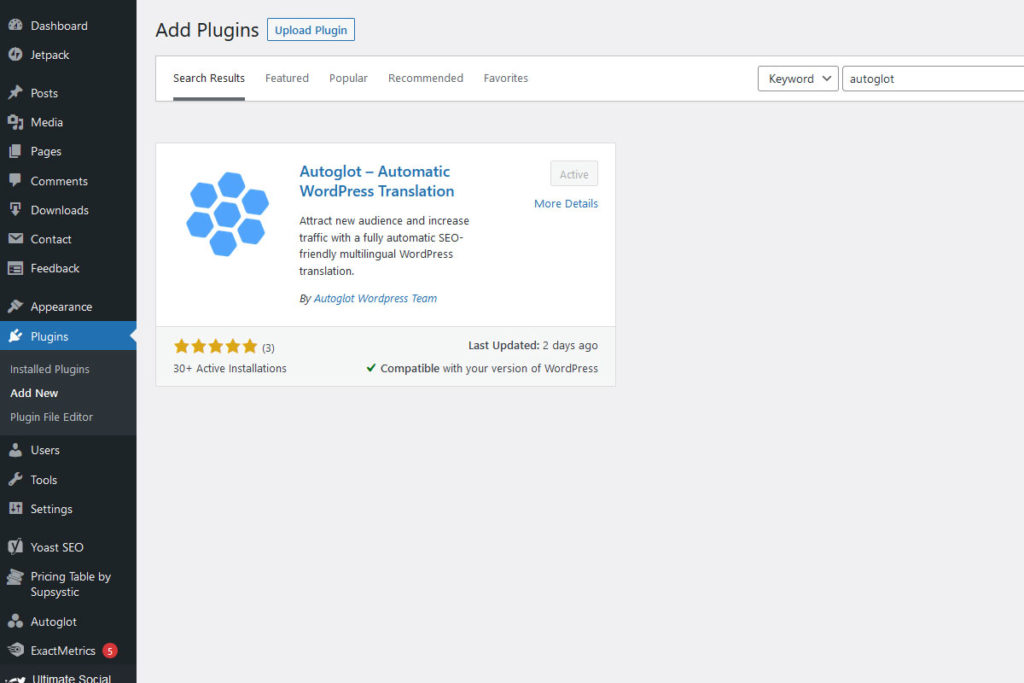
Autoglot WordPress çeviri eklentisi, resmi WordPress eklenti deposunda mevcuttur.
Adım 2: Kayıt ve E-posta Doğrulama
- Autoglot Kontrol Paneline göz atın: Web tarayıcınızda Autoglot resmi web sitesini açın ve Autoglot Kontrol Paneli'ni seçin. Henüz bir hesabınız yoksa, bir hesap oluşturun.
- E-postanızı Onaylayın: Kayıt işleminden sonra Autoglot'tan bir e-posta alacaksınız. E-postanızı açın ve hesabınızı doğrulamak için onay bağlantısına tıklayın.
- API Anahtarınızı Kopyalayın: Autoglot Kontrol Panelinize giriş yapın. Benzersiz API anahtarınızı orada bulacaksınız. Anahtarı panonuza kopyalayın.
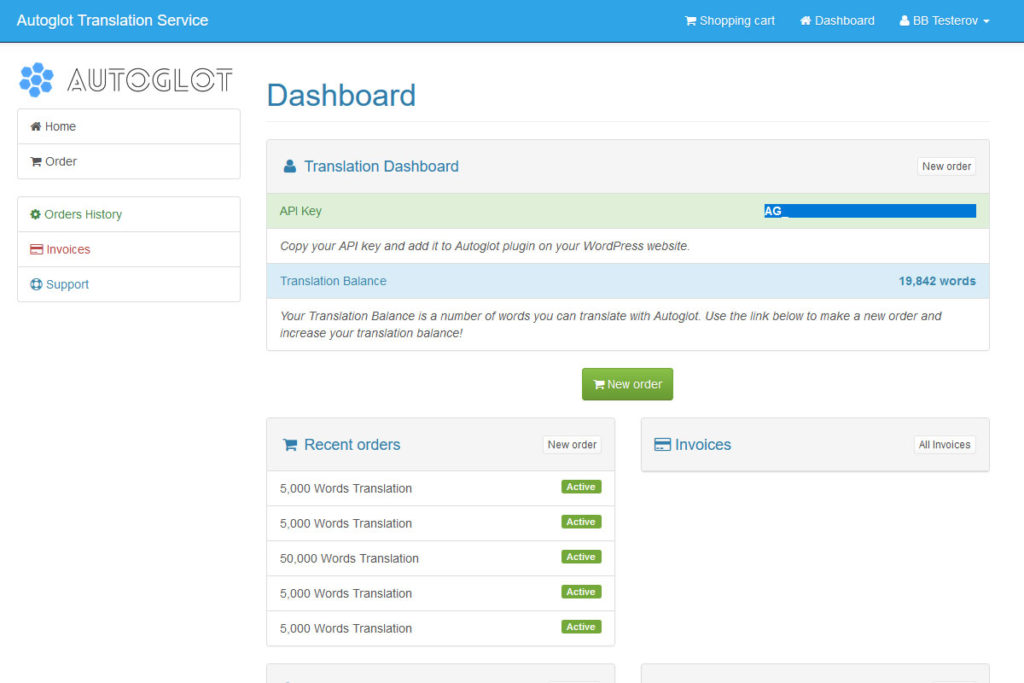
Autoglot Kontrol Paneli, çeviri bakiyenizi kontrol etmenizi sağlar.
Adım 3: Autoglot Kurulumunu Tamamlama
- API Anahtarını WordPress ayarlarına yapıştırın: WordPress kontrol panelinize dönün. Autoglot Kurulum Sihirbazı'na gidin. API anahtarınızı belirlenen alana yapıştırın.
- Çeviri için dilleri seçin: Web sitenizin çevrilmesini istediğiniz dilleri seçin. Autoglot, hedef kitlenize hitap etmek için geniş bir dil seçeneği yelpazesi sunar.
- 5000 Ücretsiz Kelimenin tadını çıkarın: Autoglot hesabınızı API anahtarını kullanarak sitenize bağladığınızda, Autoglot hesabınıza 5000 kelimeyi ücretsiz olarak aktaracaktır. Bu kelimeler ilk web sitenizin tercümesi için ve her şeyin sorunsuz çalışmasını sağlamak için kullanılabilir.
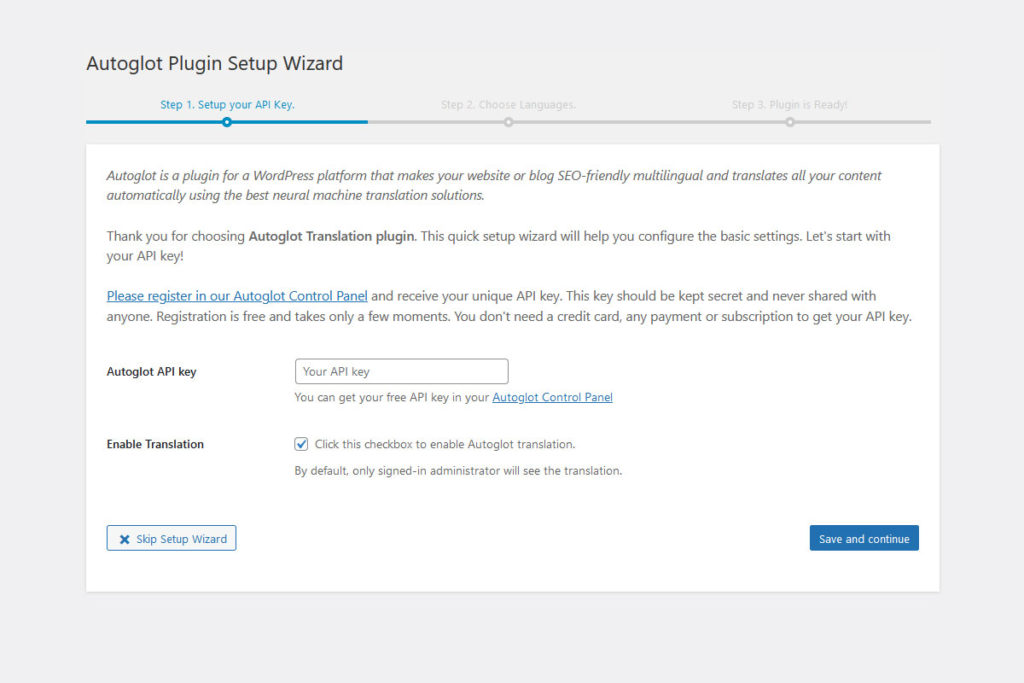
Autoglot Setup Wizard, çok dilli bir web sitesi oluşturmak için harika bir araçtır!
Adım 4: Autoglot Ayarlarını Yapılandırma
- Otomatik Dil Ayarlarını Düzenleyin: Çevrilmiş sayfaları optimize etmek için dil değiştirme seçeneklerini (menü, widget veya kayan düğme) yapılandırın ve URL çevirisi ve site haritası entegrasyonu gibi SEO ayarlarını etkinleştirin.
- Çeviriyi Başlat: Son olarak çeviri işlemini başlatın. Autoglot, ilgili sayfaları açtığınızda içeriğinizi seçilen dillere otomatik olarak çevirmeye başlayacaktır.
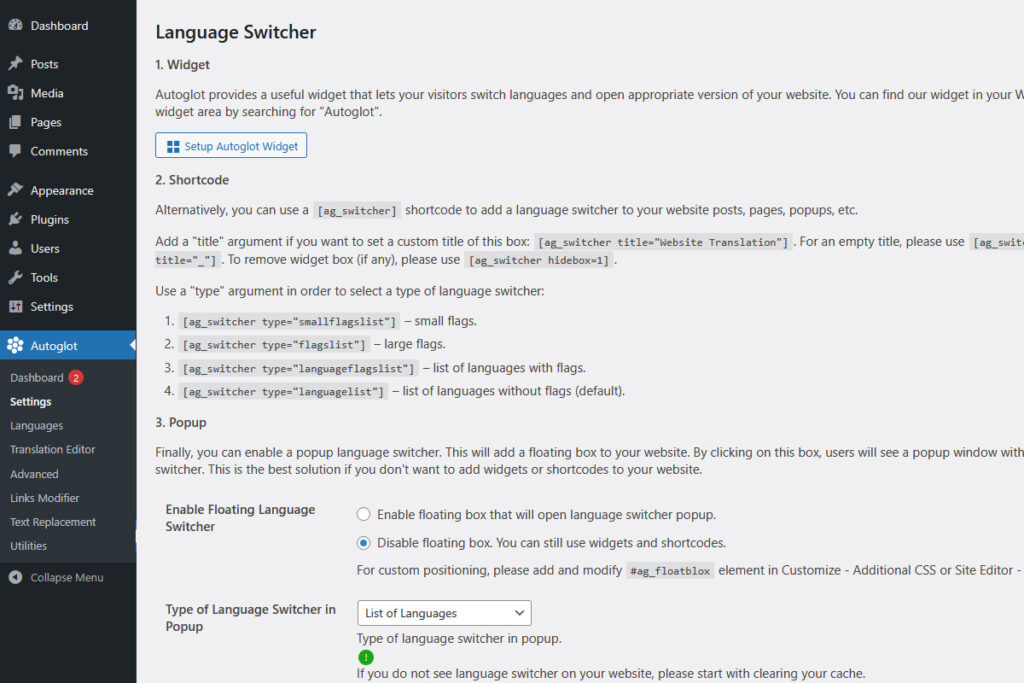
İyi yapılandırılmış bir dil değiştirici, ziyaretçilerin uygun dili seçmesini kolaylaştırırken, SEO ayarları da çevrilmiş sayfalarınızın yerel arama sonuçlarında sıralamasına yardımcı olur.
WordPress'e dil değiştirme özelliği nasıl eklenir?
Adım 5: Çevirilerin İncelenmesi
- Çevirileri İnceleyin: Otomatik çeviri çok dilli yayıncılığı büyük ölçüde kolaylaştırsa da, önemli içeriklerin gözden geçirilmesi çeviri kalitesini daha da artırabilir.
- Çevirileri Düzenle: Önemli makaleleri hassaslaştırmak, sektör terminolojisini ayarlamak, yazma stilini geliştirmek veya pazarlama mesajlarını yerel kitlelere uyarlamak için Autoglot'un yerleşik Makine Çevirisi Sonradan Düzenleme düzenleyicisini kullanın. Editör makine tarafından oluşturulan çevirilerle başladığından genellikle yalnızca küçük ayarlamalar gerekir.
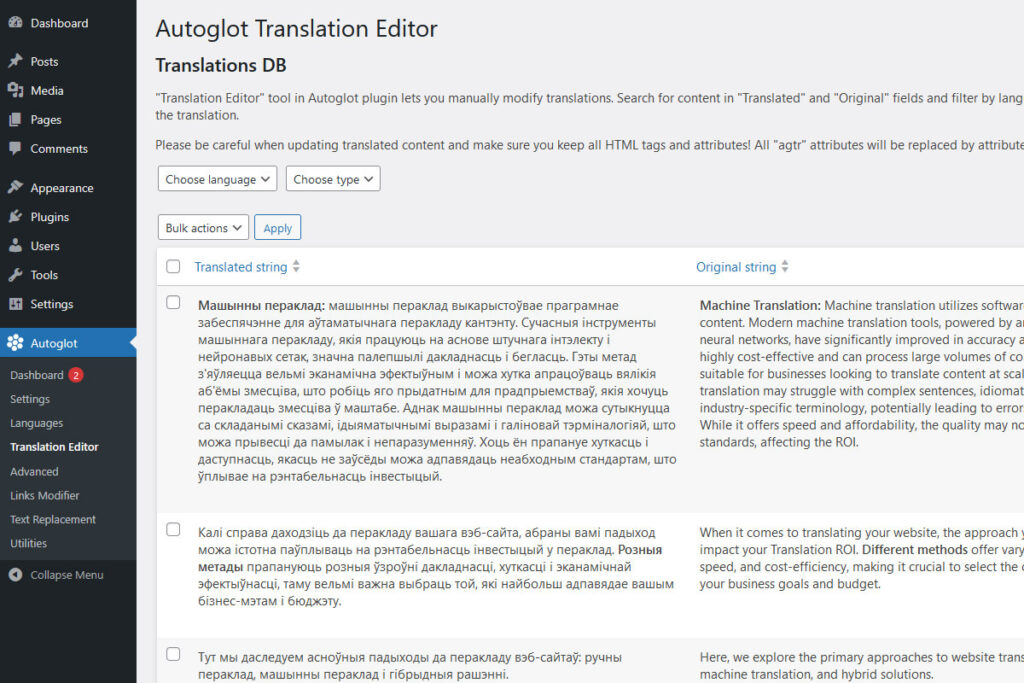
Autoglot eklentisi, çevirileri doğrudan WordPress editörü içinde manuel olarak düzenlemenize olanak tanır.
WordPress'te Çeviri Nasıl Düzenlenir?
Başarı!
İşte bu kadar! Autoglot'u WordPress web sitenize başarıyla kurdunuz ve web siteniz artık çok dilli içeriğiyle küresel bir kitleye ulaşmaya hazır.
Otomatik Çeviri Çözümlerinin Kullanımının Faydaları
Çok dilli WordPress sitenizi oluşturmaya başlarken, otomatik çeviri çözümlerinin sağladığı temel avantajları anlamak önemlidir. Çeviri eklentileri gibi bu çözümler, süreci kolaylaştırabilir, kullanıcı deneyimini geliştirebilir ve sitenizi küresel erişim için optimize edebilir. İşte WordPress siteniz için otomatik çeviri çözümlerinden yararlanmanın başlıca faydaları.
Verimlilik ve Zaman Tasarrufu:
Otomatik çeviri çözümlerinin en önemli avantajlarından biri verimlilikleridir. Büyük miktarda içeriği hızla çevirebilirler, bu da çeviri sürecinde gereken zaman ve çabayı önemli ölçüde azaltır. Bu verimlilik, özellikle birden fazla dilde içerik bulundurması gereken web siteleri için çok değerlidir ve sitenizi gecikme olmadan güncellemenize ve genişletmenize olanak tanır.
Maliyet Etkinliği
Otomatik çeviri çözümleri, geleneksel manuel çeviri hizmetlerine göre genellikle daha uygun maliyetlidir. Her dil için profesyonel çevirmen tutma ihtiyacını ortadan kaldırarak işçilik maliyetlerinden tasarruf sağlarlar. Bu da onları bütçe kısıtlamaları olan işletmeler ve web sitesi sahipleri için pratik bir seçenek haline getirir.
Ölçeklenebilirlik
Geniş içeriğe sahip veya içeriğini sık sık güncelleyen web siteleri için otomatik çözümler oldukça ölçeklenebilirdir. Büyük miktarda metni işleyebilir ve değişikliklere hızla uyum sağlayabilirler, böylece çok dilli web sitenizin güncel ve alakalı kalmasını sağlarlar.
Terminolojide Tutarlılık
Otomatik çeviri çözümleri, çevrilmiş içeriğinizde terminoloji ve üslup tutarlılığını sağlamada mükemmeldir. Bu, mesajlarınızın ve marka kimliğinizin tutarlı kalmasını sağlayarak, farklı dillerdeki ziyaretçiler için bütüncül bir deneyim yaratır.
Hız ve Anında Erişilebilirlik
Otomatik çeviri eklentileri neredeyse anında çeviri sağlayarak web sitenizin küresel bir kitleye gecikmeden ulaşmasını mümkün kılar. Ziyaretçiler, tercih ettikleri dildeki içeriğe anında erişebilir ve bu da genel kullanıcı deneyimlerini geliştirir.
Arama Motoru Optimizasyonunun (SEO) Faydaları
Eklentiler de dahil olmak üzere birçok otomatik çeviri çözümü, yerleşik SEO özellikleri sunmaktadır. Meta etiketlerini otomatik olarak çevirir, hreflang etiketleri ekler ve her dil için site haritaları oluşturarak çok dilli web sitenizi arama motoru dostu hale getirirler. Bu, sitenizin farklı dillerdeki sorgular için arama motoru sonuçlarındaki görünürlüğünü artırabilir.
Çok Dilli Kullanıcı Deneyimi
Otomatik çeviri çözümleri, kusursuz çok dilli bir kullanıcı deneyimi sunmanızı sağlar. Kullanıcılar diller arasında kolayca geçiş yapabilir, bu da etkileşimi ve memnuniyeti artırır. Bu, web sitenizin küresel bir kitle için erişilebilirliğini ve çekiciliğini artırır.
Otomatik çeviri çözümlerinin avantajlarından yararlanarak, yalnızca zamandan ve kaynaklardan tasarruf etmekle kalmaz, aynı zamanda daha geniş bir kitleye hitap eden bir web sitesi de oluşturursunuz.
Sonuç: Çeviri Eklentisini Kurun ve Çok Dilli Web Siteleriyle Küresel Potansiyelinizi Ortaya Çıkarın!
Küresel bir hedef kitleye ulaşmak, başarılı bir çevrimiçi varlık oluşturmanın önemli bir parçası haline geldi. Otomatik çeviri çözümleriyle desteklenen çok dilli web siteleri, dil engelini aşmayı ve yeni pazarlardaki ziyaretçilere ulaşmayı kolaylaştırıyor.
Otomatik çeviri çözümlerini benimseyerek ve çeviri eklentilerinden yararlanarak, WordPress web sitenizi dünya çapındaki kitleler için esnek ve kullanıcı dostu bir platforma dönüştürebilirsiniz.
İşte temel faydaların bir özeti:
- Verimlilik ve Erişim: Otomatik çeviri çözümleri, verimlilik ve ölçeklenebilirlik sunarak küresel kitlelere kolaylıkla ulaşmanızı sağlar. Zaman kazandırır, maliyetleri düşürür ve hızlı genişlemeyi kolaylaştırır.
- Tutarlılık ve SEO: Çevrilmiş içerikte terminoloji ve üslup tutarlılığını korumak, kullanıcı deneyimi için çok önemlidir. Ayrıca, otomatik çözümler genellikle yerleşik SEO özelliklerini içerir ve bu da web sitenizin arama motorlarındaki görünürlüğünü artırır.
- Çok Dilli Kullanıcı Deneyimi: Dil değiştirme seçenekleriyle kusursuz bir çok dilli kullanıcı deneyimi oluşturmak, ziyaretçilerin içeriğinize tercih ettikleri dilde zahmetsizce erişebilmelerini sağlar.
- Devam Eden Optimizasyon: Çok dilli bir web sitesi oluşturma ve sürdürme süreci sürekli devam eden bir çabadır. Gerekli iyileştirmeleri ve güncellemeleri yapmak için kullanıcı geri bildirimlerini ve performans verilerini düzenli olarak izleyin.
Çok dilli bir WordPress web sitesi oluşturmayı hedefliyorsanız, doğru otomatik çeviri çözümünü seçmenin çok önemli olduğunu unutmayın. Mevcut seçenekleri iyice araştırın, özel ihtiyaçlarınızı göz önünde bulundurun ve hedeflerinize uygun bir eklenti seçin.
Otomatik çeviri çözümleriyle desteklenen çok dilli web siteleri, hikayenizi anlatmanıza, ürün veya hizmetlerinizi paylaşmanıza ve farklı kültür ve geçmişe sahip insanlarla bağlantı kurmanıza olanak tanır.
WordPress çeviri işleriniz için Autoglot'u tercih edin!
Autoglot, servet harcamadan yeni pazarlara ulaşmanızı ve çeşitli kitlelerle bağlantı kurmanızı sağlar. İster yeni pazarlara giren bir e-ticaret işletmesi, ister küresel bir kitleye ulaşan bir blog yazarı, isterse de dünya çapında bağlantılar kuran bir birey olun, Autoglot çok dilli bir web sitesi oluşturmayı basit ve kolay hale getiriyor.
Autoglot, dil engellerini kaldırmanıza, web sitenizi daha kapsayıcı hale getirmenize ve dünya çapında yeni kitlelere ulaşmanıza yardımcı olur. Autoglot ile WordPress sitenizi farklı ülkelerden, kültürlerden ve kökenden gelen ziyaretçileri ağırlayan, erişilebilir, çok dilli bir platforma dönüştürebilirsiniz.
Autoglot'u seçin ve küresel bir hedef kitleye ulaşma ve işletmenizi çevrimiçi ortamda büyütme yolunda ilk adımı atın.