


Hotels provide a variety of services that go beyond just accommodation. These services typically include room rentals, on-site dining, wellness facilities such as spas and gyms, event hosting, and concierge assistance.
A modern hotel website serves as a central platform to present all these offerings clearly. Guests can browse available rooms, check amenities, and compare packages without contacting the hotel directly. Providing detailed descriptions and visuals of services online increases trust and helps potential guests make informed booking decisions.
Hotel Websites and Their Role in Modern Hospitality
Booking and Reservation Management
Online booking is one of the most critical functions of a hotel website. Direct reservations through the hotel’s site reduce dependence on third-party platforms, helping hotels save on commission fees. Integration with reservation systems allows real-time availability updates, dynamic pricing, and instant confirmation, creating a seamless experience for guests. A website that simplifies the booking process encourages visitors to complete reservations immediately, increasing occupancy rates.
Customer Engagement and Support
Customer engagement is another key role of hotel websites. Features like live chat, FAQ sections, contact forms, and personalized recommendations enhance the guest experience. Providing clear information about cancellation policies, check-in/check-out times, and special offers ensures transparency and reduces misunderstandings. Engaging content, such as blogs or guides about local attractions, also helps hotels build a connection with potential guests and promotes the hotel’s brand.
Branding and Reputation Management
A professional hotel website strengthens brand identity. Visual elements, consistent messaging, and easy navigation contribute to a positive perception of the hotel. Hotels can showcase customer reviews, awards, and media coverage directly on their site, influencing potential guests’ decisions. A well-designed website communicates quality and reliability, making visitors more likely to choose the hotel over competitors.
Marketing and Analytics
Hotel websites serve as a foundation for digital marketing efforts. Search engine optimization (SEO), email campaigns, social media integration, and pay-per-click advertising all rely on having a functional, content-rich website. Tracking user behavior through analytics tools provides insights into visitor preferences, booking trends, and content performance. Hotels can use this data to refine marketing strategies, improve user experience, and optimize conversion rates.
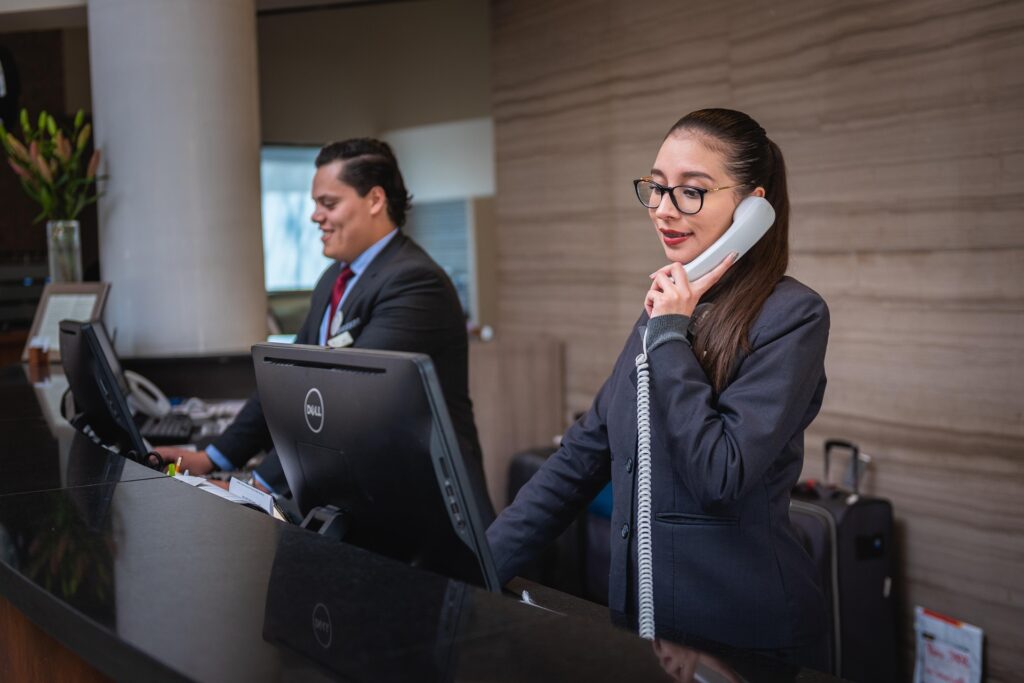
Hotel websites are essential tools for presenting services, managing bookings, engaging with guests, building brand identity, and supporting marketing efforts. They provide a centralized platform that increases trust, facilitates direct reservations, and enhances overall guest satisfaction, making them indispensable for modern hospitality businesses.
See also: Why You Should Invest In Your Hotel Website?
Why Multilingual Hotel Websites Increase Bookings
- Hotels can attract more international guests with multilingual websites. Travelers often search and book accommodations in their native language, and content that is not localized may discourage potential customers. By offering information in multiple languages, hotels make their services accessible to a wider audience, increasing the likelihood of direct bookings. A multilingual website allows hotels to compete in global markets, tapping into regions where language barriers previously limited visibility.
- Providing content in a guest’s native language enhances trust and credibility. Visitors feel more confident when room descriptions, pricing, and policies are clearly written in a language they understand. Trust is particularly important in the hospitality industry, where guests must feel secure when sharing personal information and payment details. Clear communication reduces confusion, prevents misunderstandings, and increases the chance of completed bookings.
- Multilingual websites can significantly boost conversion rates. Research shows that users are more likely to complete reservations when information is presented in their native language. Translated content helps visitors navigate booking forms, understand amenities, and compare offers without hesitation. By reducing friction in the booking process, hotels can convert more website visitors into paying customers.
- User experience improves dramatically when websites are available in multiple languages. Guests can easily find relevant information about rooms, services, and local attractions. Intuitive navigation and clear language reduce frustration and create a positive impression of the hotel. A smooth and enjoyable browsing experience encourages repeat visits and strengthens brand loyalty.
- Multilingual content also strengthens marketing and search engine optimization (SEO) efforts. Hotels can target keywords in different languages, making their website more visible in local search results. Higher visibility attracts international travelers searching for accommodations in their preferred language. Multilingual SEO ensures that marketing campaigns reach diverse audiences effectively, driving more traffic and bookings.
- Modern travelers expect personalized and accessible online experiences. A hotel website that only offers one language may appear outdated or unaccommodating. Meeting the expectation for multilingual content signals that the hotel values its international guests. This responsiveness enhances the hotel’s reputation and sets it apart from competitors.
Multilingual hotel websites expand global reach, build trust, improve conversion rates, enhance user experience, support SEO, and meet modern customer expectations. They play a crucial role in attracting international guests and increasing direct bookings by providing accessible and reliable information in multiple languages.
Read more: 5 Reasons a Multi-Language Website is Beneficial
Translation Challenges for Hotel Websites
- Accurate translation of room types and hotel services is essential. Misinterpreted descriptions of rooms, amenities, or packages can confuse guests and lead to dissatisfaction. Even small errors, such as incorrect room features or meal options, can cause complaints or booking cancellations. Ensuring precise language is critical to maintaining a professional image and delivering a reliable guest experience.
- Consistency in translation is a major challenge for hotel websites. Hotels often have multiple pages, including rooms, facilities, policies, and promotions. If terminology or style varies between pages, it can create confusion and reduce credibility. Maintaining uniform language and formatting across the website is essential for clarity and brand consistency.
- Hotel websites must accurately communicate terms, conditions, and policies. Misleading or incorrect translations of cancellation policies, check-in rules, or legal disclaimers can result in disputes with guests. Clear and precise translations protect the hotel from legal issues and ensure that guests understand their obligations and rights. This is especially important for international visitors who may be unfamiliar with local regulations.
- Translation must consider cultural differences and local preferences. Certain phrases, images, or marketing expressions may not resonate or could even offend in other cultures. Adapting content appropriately ensures that messages are received positively by international guests. Cultural sensitivity helps hotels maintain a welcoming and inclusive online presence.
- Translated content must remain SEO-friendly to attract international traffic. Incorrectly translated keywords or metadata can reduce search engine visibility. Hotels risk losing potential bookings if search engines fail to index multilingual pages effectively. Optimizing translated content for SEO ensures that the hotel website remains discoverable in multiple languages.
- Hotel websites frequently update rates, promotions, and availability. Manual translation of every change can be time-consuming and prone to errors. Without automation, updates may appear inconsistently across languages, leading to confusion and missed opportunities. Efficient translation systems are necessary to keep multilingual content current and accurate.
- Machine translation alone may not achieve the required level of accuracy for hotel websites. Post-editing ensures that room descriptions, policies, and marketing texts are clear, professional, and free of errors. Careful post-editing improves readability, preserves the hotel’s reputation, and enhances guest trust.
Translating hotel websites presents challenges in accuracy, consistency, legal compliance, cultural sensitivity, SEO, and content updates. Proper translation with post-editing is essential to ensure clear, professional, and trustworthy communication with international guests.
Read more: How to Build Trust through Website Localization?
Options for Translating WordPress-Based Hotel Websites
Manual Translation
Manual translation involves hiring professional translators to create content in each target language. This method ensures high accuracy and cultural appropriateness. Translators can adapt tone, style, and terminology for specific markets, which is critical for hospitality content. However, manual translation can be expensive, time-consuming, and difficult to maintain as websites are updated frequently.
Multilingual Themes with Static Content
Some WordPress themes come with built-in multilingual support for static content. These themes allow users to enter translations for pages and posts manually. While this option works for simple websites, it becomes cumbersome for hotel sites with frequent updates to room availability, promotions, or blog content. Static translation also limits flexibility and requires significant ongoing maintenance.
Traditional Translation Plugins
Many WordPress translation plugins rely on semi-automated workflows. They may generate translations automatically but often require manual review or adjustments. Some plugins charge recurring fees just for displaying already translated content, which can increase costs over time. Additionally, updating content can be slow, and SEO settings may need manual configuration to maintain rankings.
Fully Automated Translation Solutions
Fully automated translation plugins can translate an entire website without manual input. These tools detect new content and translate it on-the-fly, keeping all pages up-to-date. Automation reduces workload, saves time, and ensures consistency across languages. Automated solutions are particularly useful for hotel websites that update room details, offers, or blog content frequently, maintaining a professional multilingual presence effortlessly.
Hybrid Approaches
Some solutions combine machine translation with human post-editing. This hybrid method allows rapid initial translation with the option to refine key pages for accuracy. It balances speed, cost, and quality, ensuring essential hotel information is precise while keeping routine updates fast and automated. Hybrid solutions are ideal for hotels that require professional-level content for critical pages while still needing efficiency for less crucial updates.
Comparing Costs and Maintenance
Each translation option has different costs, maintenance requirements, and scalability. Manual translation is accurate but expensive and slow. Multilingual themes and traditional plugins reduce initial cost but require ongoing updates and may affect SEO. Fully automated solutions minimize workload and ensure timely updates while controlling costs. Hotels must choose an approach that fits their budget, content volume, and language expansion goals.
WordPress hotel websites can be translated using manual translation, multilingual themes, traditional plugins, fully automated solutions, or hybrid approaches. Fully automated and hybrid solutions provide the best combination of efficiency, accuracy, and cost-effectiveness for managing multilingual hotel content.
Read more: How to Translate WordPress Website?
Why Autoglot Is Ideal for Multilingual Hotel Websites
- Autoglot provides fully automated translation, eliminating the need for manual input. The plugin automatically detects new or updated content and translates it on-the-fly. This ensures that room descriptions, pricing, promotional offers, and blog posts are always up-to-date across all languages. Hotel owners no longer need to worry about manually updating translated pages, saving significant time and effort while maintaining consistency.
- Autoglot ensures that translated content remains SEO-friendly. The plugin automatically adapts metadata, titles, and URLs to each language, preserving search engine rankings. Hotels can maintain visibility in local search results for multiple countries, driving organic traffic from international audiences. This SEO compatibility makes it easier to attract bookings without compromising online presence.
- Unlike many other translation plugins, Autoglot does not require a subscription or charge for plugin usage. Users only pay for the content that is actually translated. Once translations are complete, managing the multilingual website is completely free, unlike competitors who charge ongoing fees just for showing translated content. This predictable and transparent pricing model reduces overall costs for hotel owners and makes scaling to multiple languages affordable.
- Autoglot simplifies the management of multilingual hotel websites. Language switchers, SEO settings, and content review tools are all accessible through a single plugin interface. Hotel owners can monitor translations, make adjustments, and verify accuracy without navigating multiple platforms. This streamlined management process saves time and ensures that the website remains professional and consistent across languages.
- Autoglot includes a handy machine translation post-editing (MTPE) editor. This tool allows hotel owners or editors to refine translations, ensuring perfect accuracy for room descriptions, policies, and promotions. Critical hospitality content that requires 100% precision can be reviewed and corrected easily, combining speed of machine translation with human-level quality. MTPE support ensures that hotels maintain trust and professionalism in every language.
- Autoglot supports translation into any language, making it ideal for hotels targeting international markets. Adding new languages is simple and does not require additional plugins or complex setups. Hotels can expand their global reach quickly, ensuring that all content is accessible and appealing to travelers from different regions.
Autoglot is ideal for hotel websites because it offers full automation, SEO compatibility, cost-effective pricing, easy management, a built-in MTPE editor, and support for any language. These features make it a reliable, efficient, and professional solution for building multilingual WordPress hotel websites.
Read more: How to Automate Translation Process for WordPress?
Step-by-Step Guide to Translating a Hotel Website with Autoglot
Step 1. Installing and Activating the Plugin
Start by installing the Autoglot plugin on your WordPress website.
- Navigate to the Plugins section, click “Add New,” and upload the Autoglot plugin file or search for it in the plugin repository.
- Once installed, activate the plugin to make its features available on your site.
- Activation connects the plugin with WordPress and prepares it for configuration.
You may also download Autoglot directly from the official WordPress plugins repository.
Official Autoglot WordPress Repository
Step 2. Registering in the Autoglot Control Panel
After activation, register your website in the Autoglot Control Panel.
- Create an account or log in if you already have one.
- Linking your hotel website to Autoglot with a free API key ensures that translation requests are processed correctly and that all content updates are automatically detected.
- Registration also allows you to manage your orders and track usage.
Autoglot Control Panel lets you control your translation expenses, track usage and order new translation packages.
Autoglot Control Panel
Step 3. Configuring Plugin Settings
Next, configure essential settings to optimize your multilingual hotel website.
- Set up the language switcher so visitors can easily select their preferred language.
- Adjust SEO settings to ensure that translated pages have translated URLs for search engines.
- You can also customize the appearance of language selection menus.
A well-configured language switcher makes it easy for visitors to choose a correct language version, while SEO settings help your pages rank in local search results.
How to add a language switcher to WordPress?
Step 4. Selecting Target Languages
Choose the languages into which your hotel website will be translated.
- Consider the primary markets where your international guests come from.
- Autoglot supports many language, allowing you to expand your reach globally.
- Selecting the right languages ensures that your website communicates effectively with potential guests from different regions.
Step 5. Automatic Translation Process
Once languages are selected, Autoglot automatically translates your website content.
- This includes room descriptions, policies, blog posts, and promotional pages.
- The plugin updates translations in real-time, so any changes to the original content are reflected across all languages immediately.
- This automation keeps your website current without manual intervention.
Step 6. Reviewing Translated Content
After translation, review the content to ensure accuracy and quality.
- Use the built-in MTPE editor to make corrections or refine translations for clarity and professionalism.
- Post-editing is particularly important for hotel websites, where precise descriptions, pricing, and policy information affect guest trust and bookings.
- This step ensures that all content is both accurate and appealing.
The Autoglot plugin allows you to manually edit the translations directly within the WordPress editor.
How To Edit Translation in WordPress?
Final Check and Launch
Finally, test the multilingual website thoroughly before publishing.
- Verify that the language switcher works, pages are fully translated, and SEO settings are correctly applied.
- Once everything is confirmed, your hotel website is ready to welcome international guests with accurate, professional content in multiple languages.
Translating a hotel website with Autoglot involves plugin installation, registration, configuration, language selection, automated translation, content review, and final testing. Following these steps ensures a fully functional, multilingual WordPress hotel website that is accurate, SEO-friendly, and ready for global visitors.
Conclusion
Building a multilingual hotel website is essential for reaching a global audience, boosting bookings and increasing sales. Travelers increasingly search for accommodations in their native language, and providing content in multiple languages can significantly increase direct bookings.
A website that communicates clearly in several languages enhances trust, improves user experience, and encourages guests to choose the hotel over competitors. For hotels aiming to expand internationally, a multilingual online presence is no longer optional—it is a key factor for business growth.
Autoglot: Your Translation Solution for Hotel Website
Autoglot offers a comprehensive solution for translating WordPress-based hotel websites. Its fully automated system eliminates the need for manual updates, allowing new content, promotions, and room details to be translated on-the-fly.
This automation ensures consistency across all pages and keeps translations current, which is critical for hotel websites that frequently update information. Unlike many competitors, Autoglot does not charge ongoing fees for plugin usage; users pay only for the content that is translated, making costs predictable and manageable.
In summary, a multilingual hotel website powered by Autoglot maximizes reach, improves guest trust, and enhances bookings. With full automation, SEO support, cost-effective pricing, easy management, and precise translation tools, Autoglot is an ideal choice for WordPress-based hotel websites.
Hotels can expand globally, maintain consistent content, and provide a professional online experience that attracts and satisfies international guests.